Understanding Your Sleep Score: Myths vs. Facts
Sleep tracking has gone mainstream — but what does your sleep score actually measure? Here's what Oura and WHOOP data really means, and the habits proven to raise it.

Meta description: Confused by your sleep score? Here’s what Oura, WHOOP, and other trackers actually measure — and the circadian habits proven to raise it.
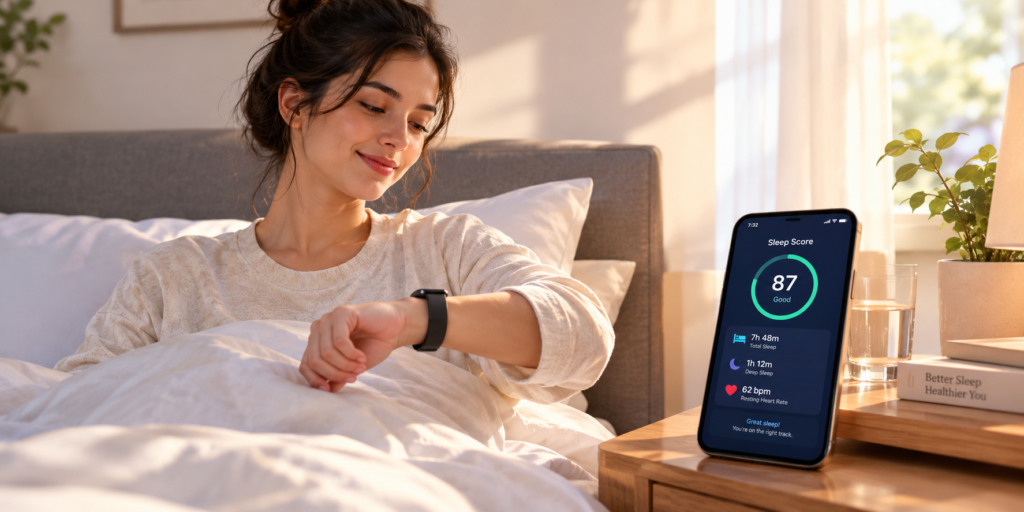
Sleep tracking has quietly become one of the most mainstream health upgrades of the decade. What used to be a vague “I slept okay, I guess” is now a hard number on your phone every morning — and for many people, that number has become as obsessed-over as their step count. But what does a sleep score actually measure, and does chasing a higher one actually make you healthier? Here’s the science behind it.
What Is a Sleep Score, Really?
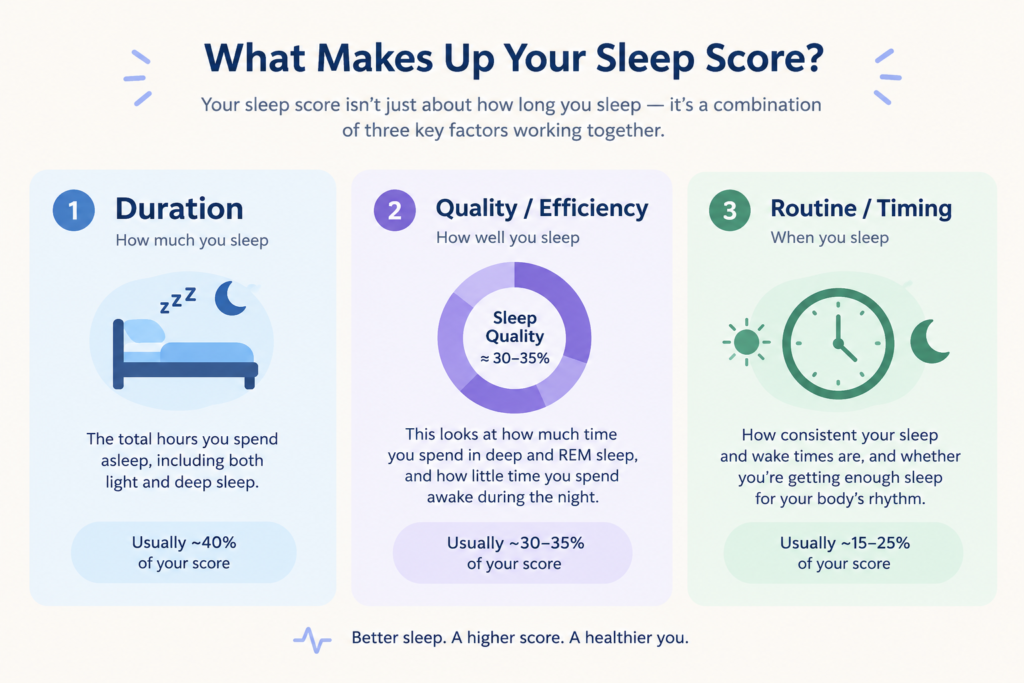
Your sleep score isn’t just tracking how long you slept. Wearables like Oura track sleep contributors including total sleep time, sleep efficiency (how much of your time in bed you were actually asleep), latency (how long it took you to fall asleep), restfulness (how much you tossed and turned), and timing (whether your bedtime aligned with your circadian rhythm and chronotype) — all combined into one daily number.
Newer sleep-scoring models are shifting away from the old “8 hours is the goal” mindset. Sleep Cycle’s newest scoring system, for example, is built on three pillars — duration, quality, and routine — reflecting recent research showing regular bedtimes and wake times predict lower mortality risk and better overall health than sleep duration alone, while a growing gap between weekday and weekend sleep schedules has been linked to higher BMI, elevated blood pressure, and metabolic disruption.
Why Routine Might Matter More Than Duration?
This is the part most people miss. Sleep consistency — going to bed and waking up at roughly the same time daily — is increasingly treated as its own health metric. Research shows high sleep regularity is associated with a lower risk of all-cause mortality, independent of total sleep duration, and improved sleep consistency is linked to higher heart rate variability (HRV), a key marker of how ready your body is to perform and recover.
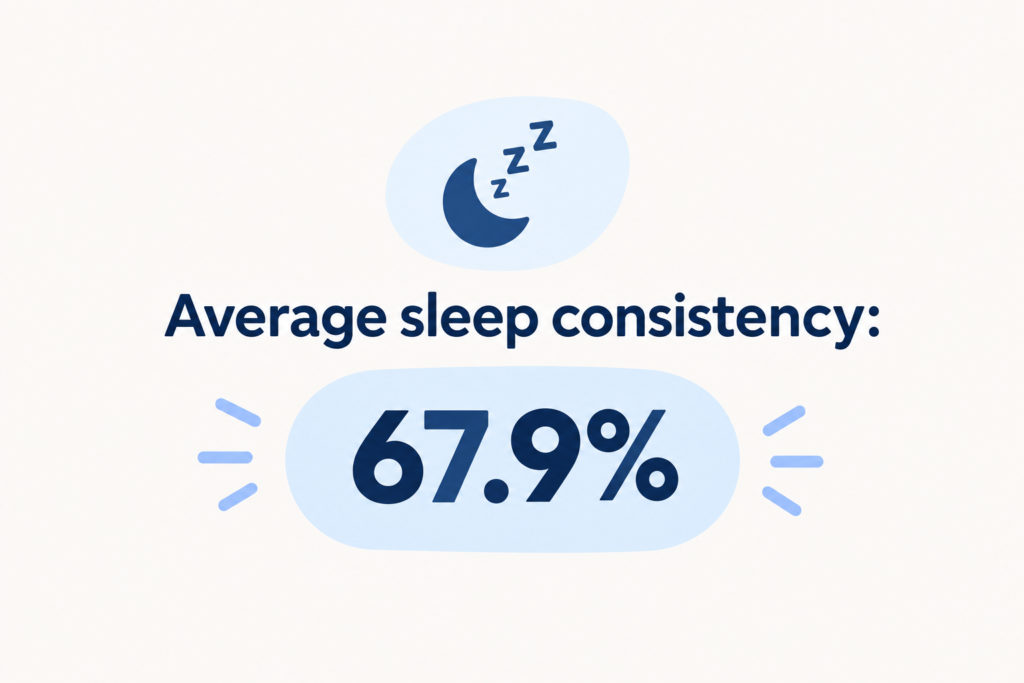
For context: across a large sample of WHOOP users, the average sleep consistency score was just 67.9%, with users averaging about 7 hours and 11 minutes of sleep per night — meaning most people are getting close to enough sleep, but not nearly enough regularity.
The Four Habits Proven to Improve Your Sleep Score
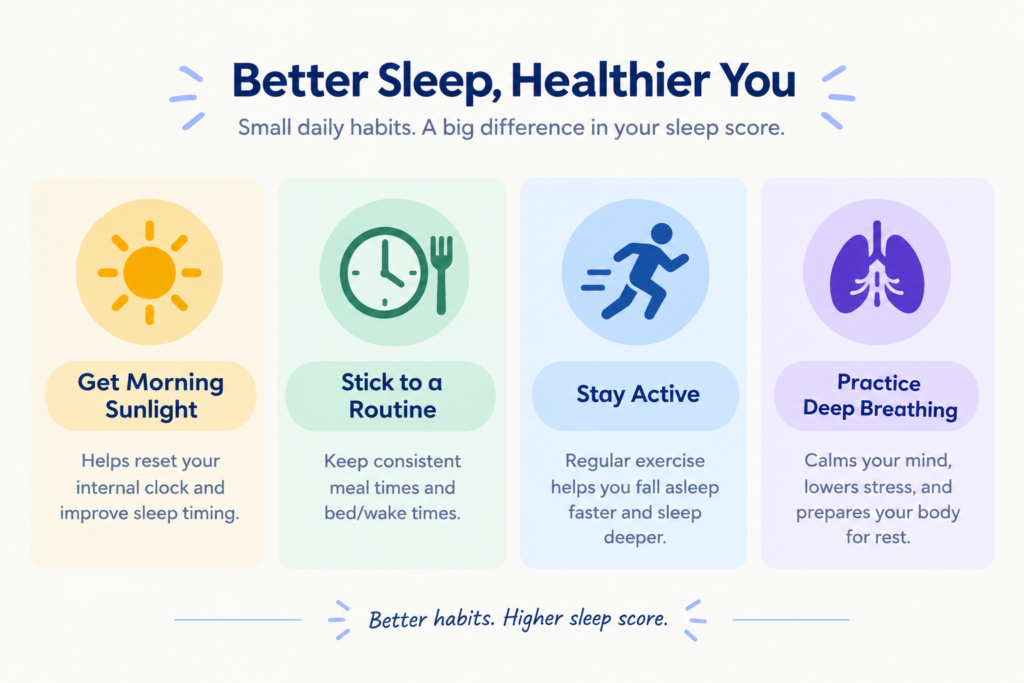
A large 2026 study published in the journal Sleep, involving over 38,000 adults monitored with WHOOP devices over a 31-day period, found that four simple daily habits significantly improved sleep regularity, heart health, and recovery:
- Morning sunlight exposure — helps anchor your circadian clock early in the day
- Time-restricted eating — aligning meal timing supports metabolic and sleep rhythms
- Zone 2 cardiovascular training — moderate, sustained cardio linked to better recovery
- Breathwork — supports parasympathetic (rest-and-digest) nervous system activity
The study found these behaviors improved sleep consistency, resting heart rate, and HRV — and notably, the improvements in fitness and nervous system regulation happened independent of how long people actually slept, meaning consistency and these habits mattered more than duration alone. Participants also kept up these habits for at least a month after the study ended, suggesting they’re realistic to stick with long-term.
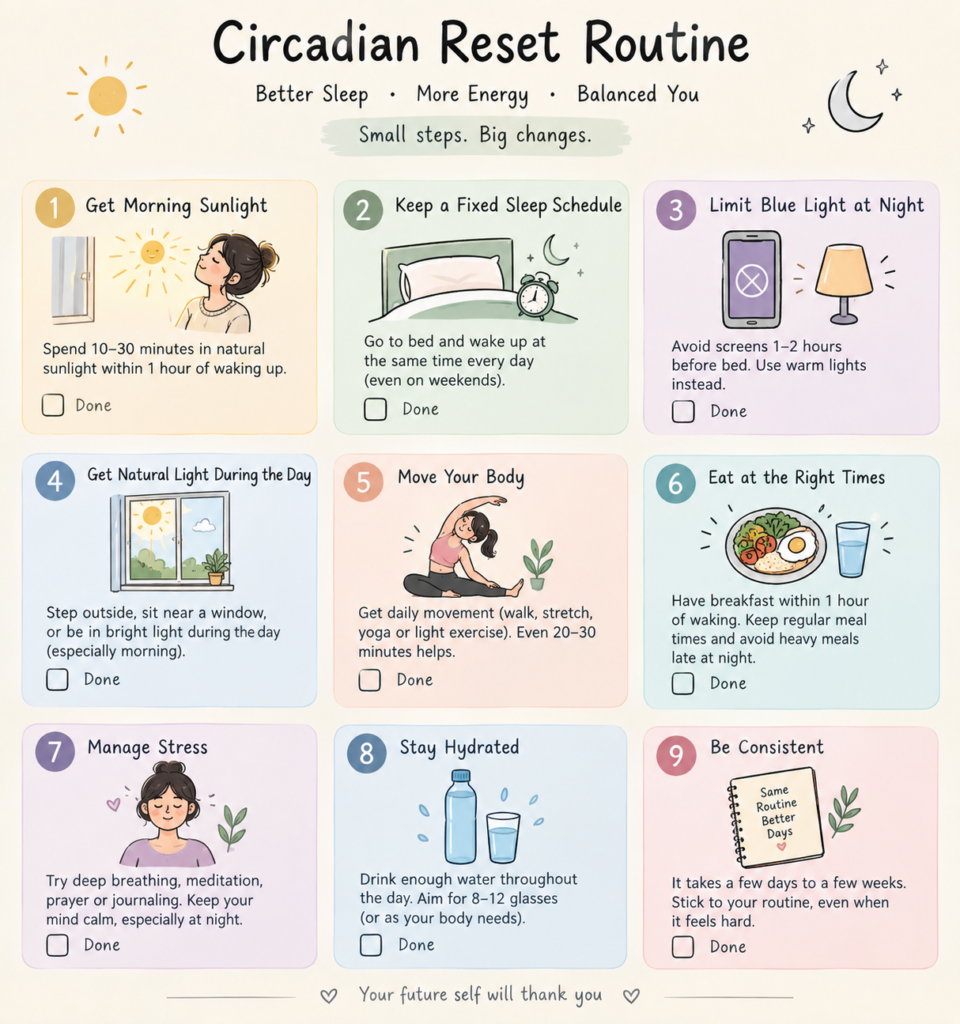
Circadian Rhythm Reset: A Simple Starting Point
If your sleep score is chronically low, the fix usually isn’t “go to bed earlier” — it’s rhythm first, duration second:
- Pick one consistent wake-up time and stick to it, even on weekends
- Get natural sunlight within the first 30–60 minutes of waking
- Keep meal timing consistent, and avoid heavy meals close to bedtime
- Add 10–20 minutes of daylight movement (a walk counts)
- Wind down with breathwork or a screen-free buffer before bed
- Let bedtime follow naturally from a consistent wake time — not the other way around
Frequently Asked Questions
Your sleep score isn’t just a duration counter — it’s a proxy for how well-aligned your daily rhythm is with your biology. Chasing a higher number by focusing only on hours in bed misses the bigger picture: regularity, morning light, and a few consistent daily habits move the needle more than most people realize.
This article is for general wellness information and isn’t a substitute for medical advice. If you have chronic sleep issues, talk to a doctor or sleep specialist.