
What Is Cancer? Causes, Types, Symptoms & Treatment (2026 Guide)

Learn what cancer is, what causes it, how it’s diagnosed and treated, and how to lower your risk — a clear, evidence-based guide for patients and families.
What Is Cancer?
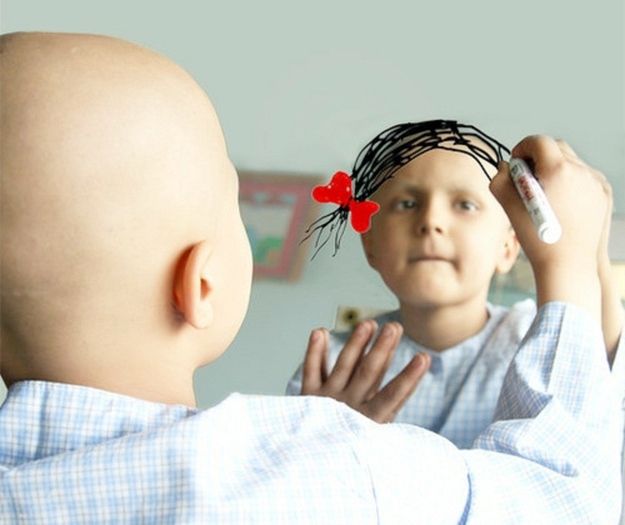
Cancer is a disease in which abnormal cells divide uncontrollably and can invade surrounding tissue. It is not one illness but a category of more than 100 related diseases, each defined by where it starts in the body and how its cells behave. This guide explains what causes cancer, how it’s diagnosed, the main treatment options, and the steps that meaningfully reduce risk.
What Causes Cancer?
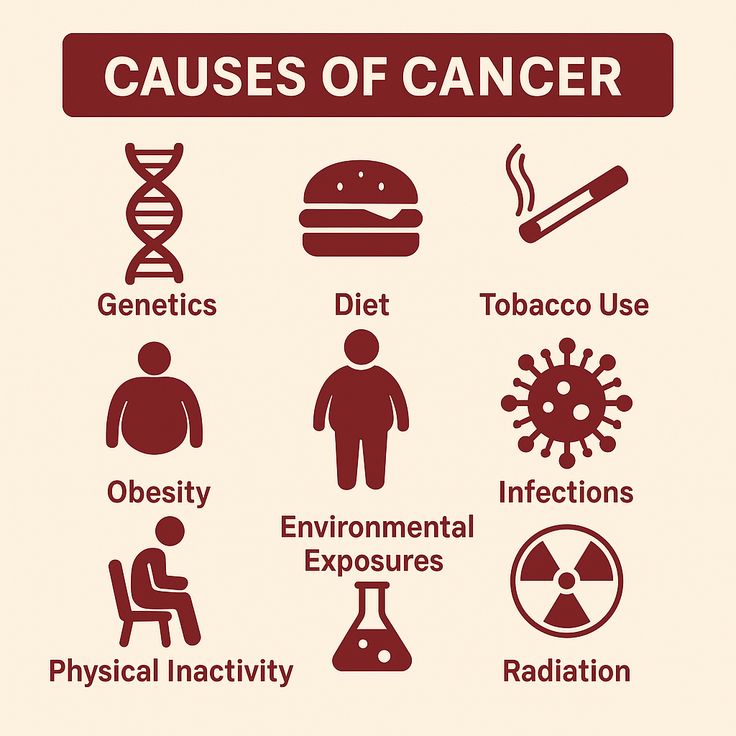
Cancer develops when mutations accumulate in a cell’s DNA, disabling the normal checkpoints that control cell growth and death. No single cause explains most cases — it’s typically the result of genetics, environment, and lifestyle interacting over time. The most well-documented risk factors include:
- Tobacco use — the single largest preventable cause of cancer worldwide, most strongly linked to lung cancer
- Chronic infections — including HPV (cervical and other cancers) and Hepatitis B/C (liver cancer)
- UV and radiation exposure — a leading cause of skin cancer
- Alcohol consumption — linked to cancers of the mouth, throat, liver, breast, and colon
- Excess body weight and inactivity — associated with higher risk across multiple cancer types
- Inherited gene mutations — such as BRCA1/BRCA2, which raise breast and ovarian cancer risk
- Environmental and occupational exposures — including certain industrial chemicals and pollutants
Having one or more risk factors does not guarantee cancer will develop, and some people with no known risk factors are still diagnosed — risk is probabilistic, not deterministic.
What Are the Main Types of Cancer?
Cancer is classified by the tissue or organ where it originates. The most commonly diagnosed types include:
- Breast cancer — originates in breast tissue; one of the most common cancers in women worldwide
- Lung cancer — strongly associated with smoking; a leading cause of cancer death globally
- Prostate cancer — one of the most common cancers in men, often slow-growing
- Colorectal cancer — affects the colon or rectum; screening can catch it at a highly treatable stage
- Skin cancer — including melanoma, the most serious form, closely linked to UV exposure
- Leukemia and lymphoma — blood and lymphatic system cancers, more common in structure than location
Each type is further staged (I–IV, indicating how far it has spread) and graded (how abnormal the cells appear), both of which guide treatment planning.
What Are the Early Signs of Cancer?
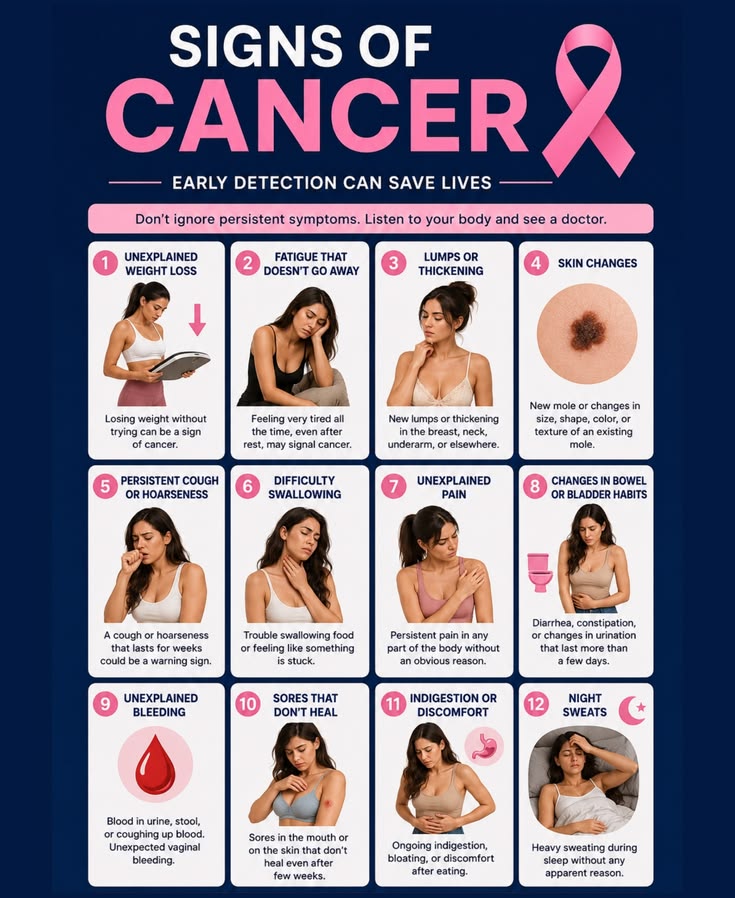
Symptoms vary widely by cancer type, but general warning signs worth discussing with a doctor include unexplained weight loss, persistent fatigue, unusual lumps, changes in bowel or bladder habits, persistent cough or hoarseness, unexplained bleeding, and sores that don’t heal. Many cancers cause no symptoms in early stages, which is why routine screening matters more than waiting for symptoms to appear.
How Is Cancer Diagnosed?
Diagnosis typically combines several tools to confirm cancer and determine its stage:
- Screening tests — mammograms, colonoscopies, Pap smears, and low-dose CT scans that can detect cancer before symptoms appear
- Imaging — CT, MRI, and PET scans to locate and measure tumors
- Biopsy — the definitive test, in which a tissue sample is examined under a microscope
- Blood tests — including tumor marker tests used alongside other diagnostics
Signs of Cancer
- Unexplained Weight Loss.
- Fatigue that doesn’t go away.
- Lumps or Thickening.
- Skin Changes.
- Persistent Cough & Hoarseness.
- Difficulty Swallowing.
- Unexplained Pain.
- Changes in Bowel and Bladder habits.
- Unexplained Bleeding.
- Sores that don’t heal.
- Night Sweats.
- Indigestion and Discomfort.
Treatment:
How Is Cancer Treated?
Treatment is chosen based on cancer type, stage, and the patient’s overall health, and often combines more than one approach:
- Surgery — physical removal of the tumor
- Chemotherapy — drugs that kill or slow fast-dividing cancer cells
- Radiation therapy — high-energy beams that destroy cancer cells at a targeted site
- Immunotherapy — treatments that help the immune system recognize and attack cancer
- Targeted therapy — drugs designed around the specific genetic mutations of a tumor
- Hormone therapy — used for hormone-driven cancers such as some breast and prostate cancers
Precision oncology — matching treatment to a tumor’s genetic profile — has become one of the fastest-advancing areas of cancer care, often improving effectiveness while reducing side effects.
Prenvention:
Can Cancer Be Prevented?
Not all cancer is preventable, but research consistently shows these habits lower risk:
- Avoid all forms of tobacco
- Maintain a healthy weight and stay physically active
- Eat a diet rich in fruits, vegetables, and whole grains
- Limit alcohol intake
- Protect skin from excessive UV exposure
- Get recommended vaccinations (HPV, Hepatitis B)
- Keep up with age-appropriate cancer screenings.
Cancer Rate 2026
The latest data shows for 2026 (U.S. figures, from the American Cancer Society’s annual report)
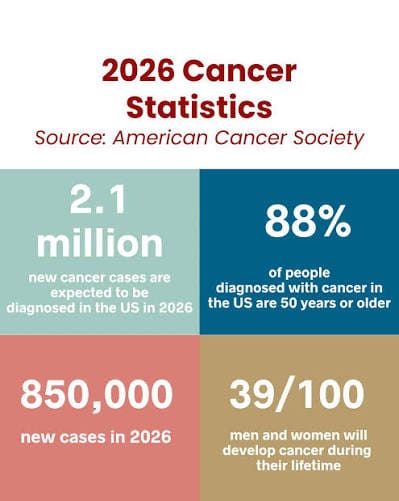
New cases and deaths The American Cancer Society projects approximately 2,114,850 new cancer cases and 626,140 cancer deaths in the US for 2026 — that works out to roughly 5,800 new diagnoses every day, with about 1,094,070 men and 1,020,780 women expected to be diagnosed.
Incidence rate The overall rate of new cancer cases runs about 450.7 per 100,000 people per year, with a death rate of 143.2 per 100,000 (based on 2019–2023 data). Lifetime risk stands at roughly 39.2% — meaning about 2 in 5 people will be diagnosed with cancer at some point in their life.
The trend is mixed — some good news, some concerning:
- Mortality is still falling. The cancer death rate has continued declining through 2023, averting an estimated 4.8 million deaths since 1991, largely thanks to less smoking, earlier detection, and better treatment.
- Survival is improving. Five-year relative survival reached 70% overall for cancers diagnosed 2015–2021, up from 63% in the mid-1990s.
- But incidence is rising for some cancers, especially in younger people. Breast cancer incidence rose about 1% per year from 2013–2022, driven largely by increases in women under 50 Prostate cancer incidence is climbing roughly 2.9% per year, with an even sharper 5.6% annual rise in advanced-stage cases.
- Lung cancer remains the top killer. Lung cancer will cause more deaths in 2026 than second-ranked colorectal cancer and third-ranked pancreatic cancer combined.
- Disparities persist. American Indian/Alaska Native populations have the highest incidence rates, and Black men have the highest sex-specific mortality.
A note of caution the report itself raises: researchers warned that proposed federal cuts to cancer research funding and health insurance access could threaten future progress despite these gains.
This article is for general informational purposes only and is not a substitute for professional medical advice, diagnosis, or treatment. Always consult a qualified healthcare provider with questions about a medical
{
  "@context": "https://schema.org",
  "@type": "FAQPage",
  "mainEntity": [
    {
      "@type": "Question",
      "name": "Is cancer curable?",
      "acceptedAnswer": {
        "@type": "Answer",
        "text": "Many cancers are curable, especially when caught early. Outcomes depend on cancer type, stage at diagnosis, and how quickly treatment begins."
      }
    },
    {
      "@type": "Question",
      "name": "What is the survival rate for cancer?",
      "acceptedAnswer": {
        "@type": "Answer",
        "text": "Survival rates vary by cancer type and stage. Some early-stage cancers have survival rates above 95%, while others are more challenging to treat."
      }
    },
    {
      "@type": "Question",
      "name": "Is cancer hereditary?",
      "acceptedAnswer": {
        "@type": "Answer",
        "text": "Most cancers are not directly inherited, but certain gene mutations such as BRCA1 and BRCA2 can significantly raise risk and run in families."
      }
    },
    {
      "@type": "Question",
      "name": "What is the difference between benign and malignant tumors?",
      "acceptedAnswer": {
        "@type": "Answer",
        "text": "A benign tumor does not invade nearby tissue or spread. A malignant tumor is cancerous and can invade surrounding tissue and spread to other organs."
      }
    },
    {
      "@type": "Question",
      "name": "Can lifestyle changes really reduce cancer risk?",
      "acceptedAnswer": {
        "@type": "Answer",
        "text": "Avoiding tobacco, limiting alcohol, maintaining a healthy weight, staying active, and protecting skin from UV exposure are well-supported ways to reduce cancer risk."
      }
    }
  ]
}